
Two years into the pandemic. By now we are well aware that the disease is just one of the problems this crisis has intensified: labor shortages, rising input prices and logistics problems have caused more disruption than was forecast even in early 2021.
In recent months, we have witnessed the bottlenecks that have hit supply chains and led to transportation cost increases of up to 900%, causing delays across the entire global supply chain and a major headache for many industries, including, of course, agriculture.
And no wonder: according to the Organization for Economic Co-operation and Development (OECD), an estimated 90% of the world's goods are currently transported by sea, and 60% of them, including virtually all imported fruit, devices and appliances, move in these steel containers. In total, according to Statista, around $14 trillion worth of the world's goods are shipped this way.
SKYROCKETING COSTS
Two years on, ocean freight prices are completely unrecognizable, and at this stage of the game we know the situation is far from over.
GLOBAL FREIGHT RATE INDEX, JULY 2019 TO DECEMBER 2021 (USD)
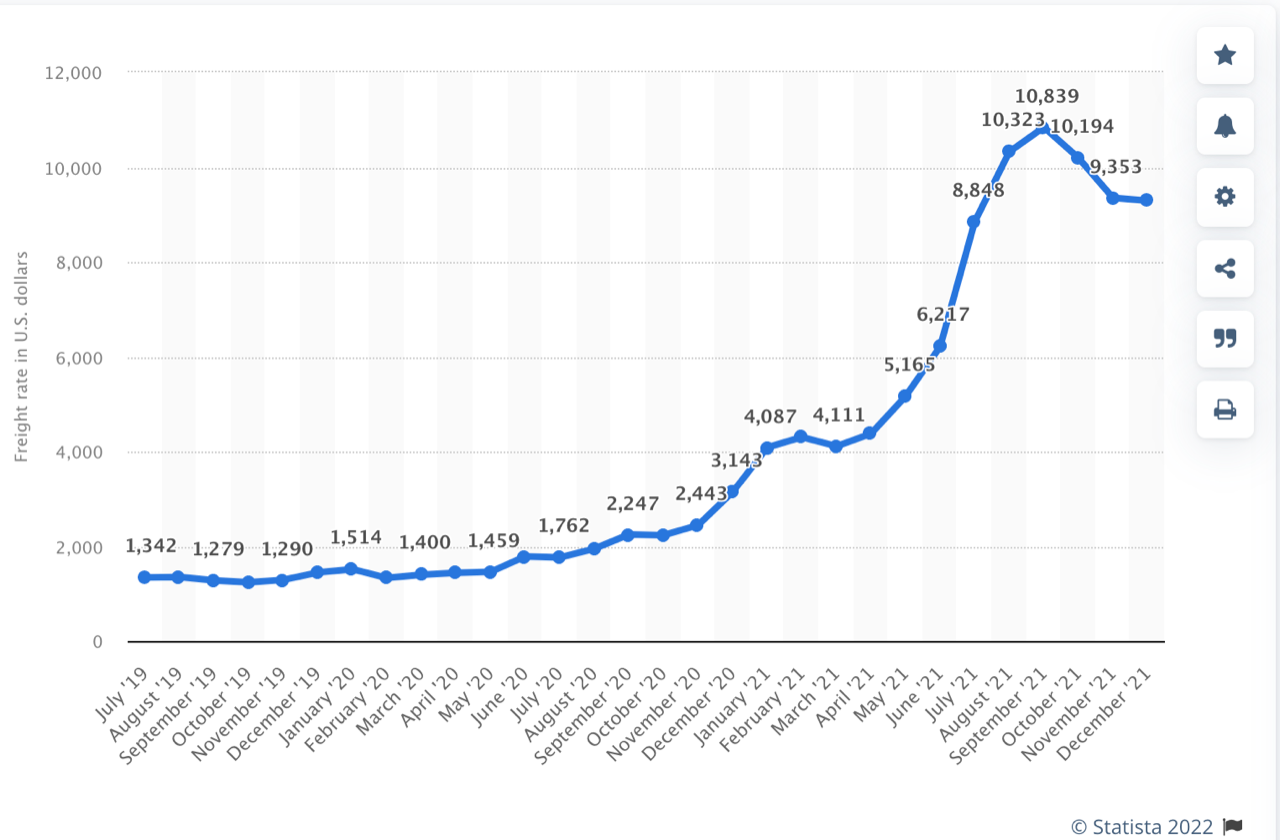
*The index is based on real-time, aggregated and anonymized commercial data from global freight carriers, forwarders and shippers using the WebCargo by Freightos freight rate management platform.
*Values are an average of the five business days of the last full week of each month.
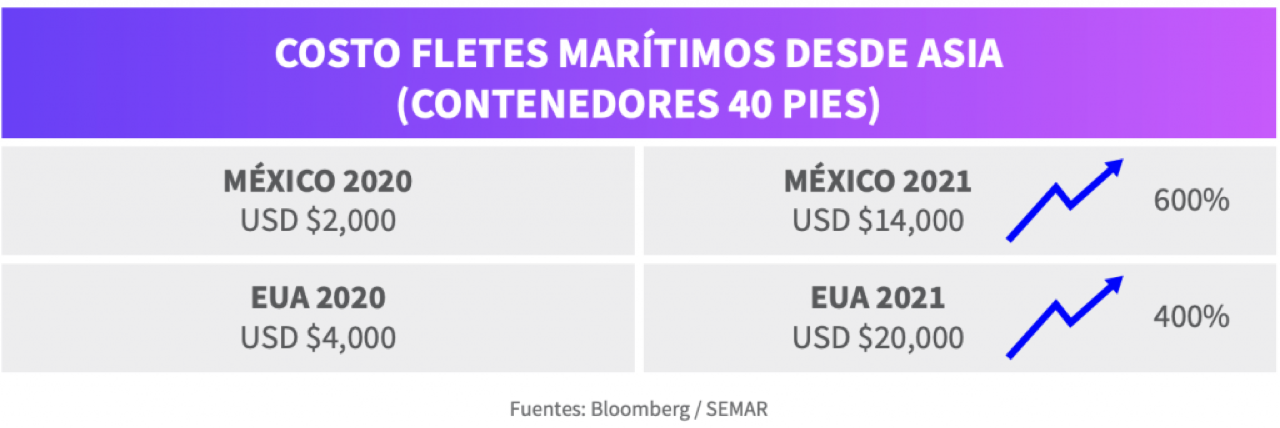
To be more specific, according to Bloomberg, the cost of shipping a 40-foot container from Asia to the United States exceeded USD $20,000 in 2021, compared with less than USD $2,000 before the pandemic; even when the health crisis began in 2020, it stood at USD $4,000 (this year its price has hovered around US $14,000).
Things have been no different for our country: according to Mexico's Secretariat of the Navy (SEMAR), in January 2020, when the first Covid-19 infections were being reported, shipping a 40-foot container from the Chinese ports of Shanghai, Ningbo, Yantian, Xiamen, Qingdao or Hong Kong to Lázaro Cárdenas cost only USD $2,002 per container.
Meanwhile, in October 2021, the cost of shipping a 40-foot container between China and Mexico climbed to more than USD $14,265.
WHAT'S NEXT?
The comparison speaks for itself and, unfortunately, 2022 is shaping up to look similar; the United Nations Conference on Trade and Development (UNCTAD) even warned a few weeks ago that the price increases could continue for another 24 months.
Heavy demand and booming business are putting more and more pressure on workers in the technology and food industries. And although the U.S. government has already expressed concern about the risks of having supply chains for strategic sectors located far from its market, for now we have to deal with the current situation with China.
While it's true that we can't control external factors like these, there are actions within our reach that we can take to work around them, and these recommendations from Rabobank can help:
- Advance planning
- Optimizing our operating processes
- Securing containers through contracts to avoid significant price fluctuations
- Supply chain transparency
- Adding value to our products to offset potential cost increases for our customers
It's up to us to treat these past months of complications in the logistics industry as a learning experience, because the next two years look very similar to the previous ones, and flexibility and adaptability will be key to handling whatever situations arise with both customers and suppliers.
Challenges always bring new opportunities!