In recent years, the debate over the feasibility of fully organic production has sparked conflicting opinions. From ambitious policy proposals to failed experiments, the topic is at the center of the discussion about the future of agriculture and food sustainability.
On one hand, we see cases like Sri Lanka, where an abrupt shift to 100% organic agriculture had devastating consequences. According to an article in El País, the experiment carried out in 2021 ended up collapsing the country’s agricultural system, affecting both production and its economy. This left a clear lesson: a radical change without preparation or viable alternatives can be counterproductive.
At the other extreme, countries such as Germany are betting on a gradual, planned increase in organic production, with an ambitious but realistic target of 30% by 2030 (Crónica). This approach seeks a balance between environmental sustainability and economic viability, something that seems more achievable and reasonable.
Is it viable?
The idea of fully organic agricultural production has great moral and ecological appeal. However, taking this idea to 100% would not only be extremely costly but could also compromise global food security, since organic systems, although more environmentally friendly, tend to have lower yields than conventional ones, which creates significant challenges if the goal is to meet global food demand with this type of production alone (BBC).
On the other hand, Robert F. Kennedy Jr., nominated by Donald Trump as the new U.S. Health Secretary, has advocated for the gradual elimination of hazardous chemicals in agriculture, prioritizing public health and environmental protection. Kennedy argues that exposure to pesticides and other synthetic products harms not only ecosystems but also people, especially in terms of chronic diseases. His vision invites us to rethink our excessive dependence on toxic chemicals, without ruling out the need for viable alternatives that ensure productivity.
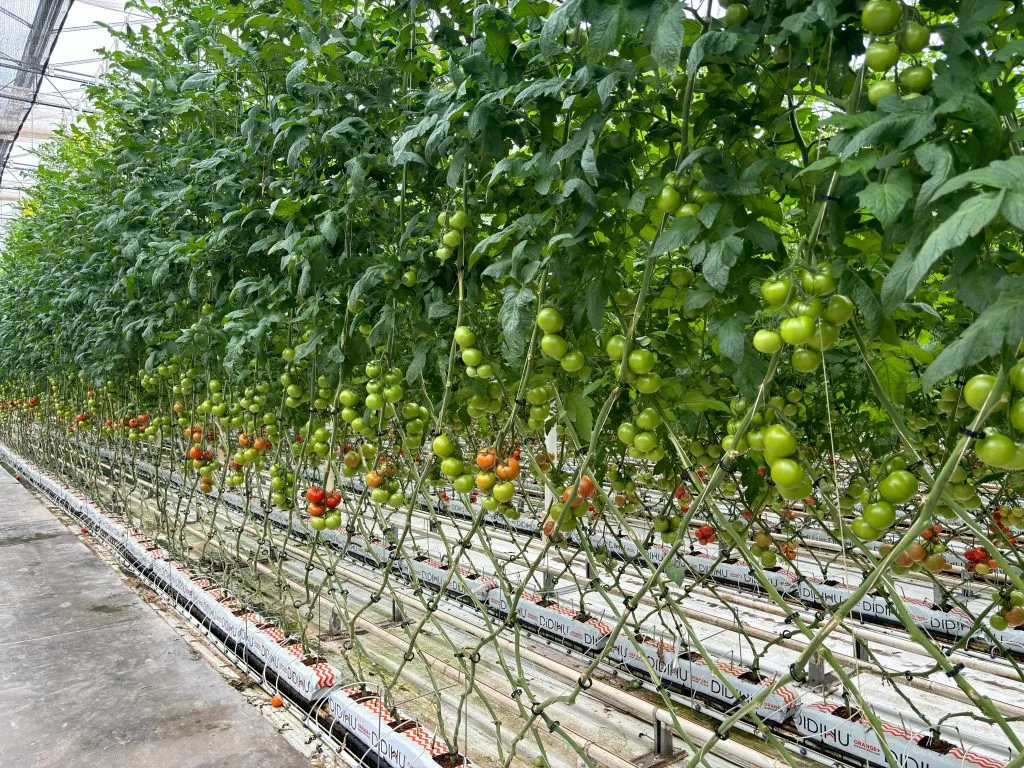
A biorational approach
That is why the position is clear: fully organic production is not a realistic goal. However, that does not mean we should give up on improving our agricultural practices. The solution lies in embracing a biorational approach that combines the best of both worlds. This means:
- Minimizing the use of highly toxic chemicals, replacing them with less aggressive alternatives such as bio-inputs and green technologies.
- Incorporating technologies and biostimulants that improve crop efficiency while respecting the natural cycles of ecosystems.
- Prioritizing education and the development of public policies that promote sustainable, accessible practices for growers at every level.
The debate over organic production should not be polarized between idealists and pragmatists. Instead, it should focus on how to move toward more sustainable, efficient, and ethical agriculture without compromising food production or farmers’ economic viability.
In a world where the population keeps growing and resources are increasingly limited, the path lies in the middle ground: the biorational approach. This approach allows us to move toward a more balanced agricultural system, where sustainability is not a utopian goal but a constant process of improvement.