317 Words | 1.5 min read
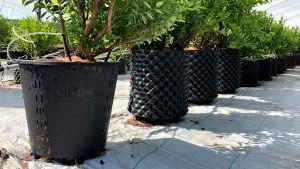
Among the coconut fiber formats available on the market, one stands out for its practicality. The Organic Premium Mix Naked Block.
Same water retention, same uniformity, same quality.
We want to show how coconut fiber in compressed blocks is a highly beneficial option for optimizing your crops. These blocks offer significant technical advantages to improve your results, such as:
- Fresh plant: the ideal balance between water and air.
- Comfortable roots: optimal water retention so the root is more comfortable.
- Uniformity: production systems that guarantee a consistent composition.
With these benefits in mind, the question now is: how do you use it to unlock its full potential? What do I do when the block arrives? We answer below.

How do you hydrate a block of COCONUT FIBER?
(For agricultural use)
STEP 1:
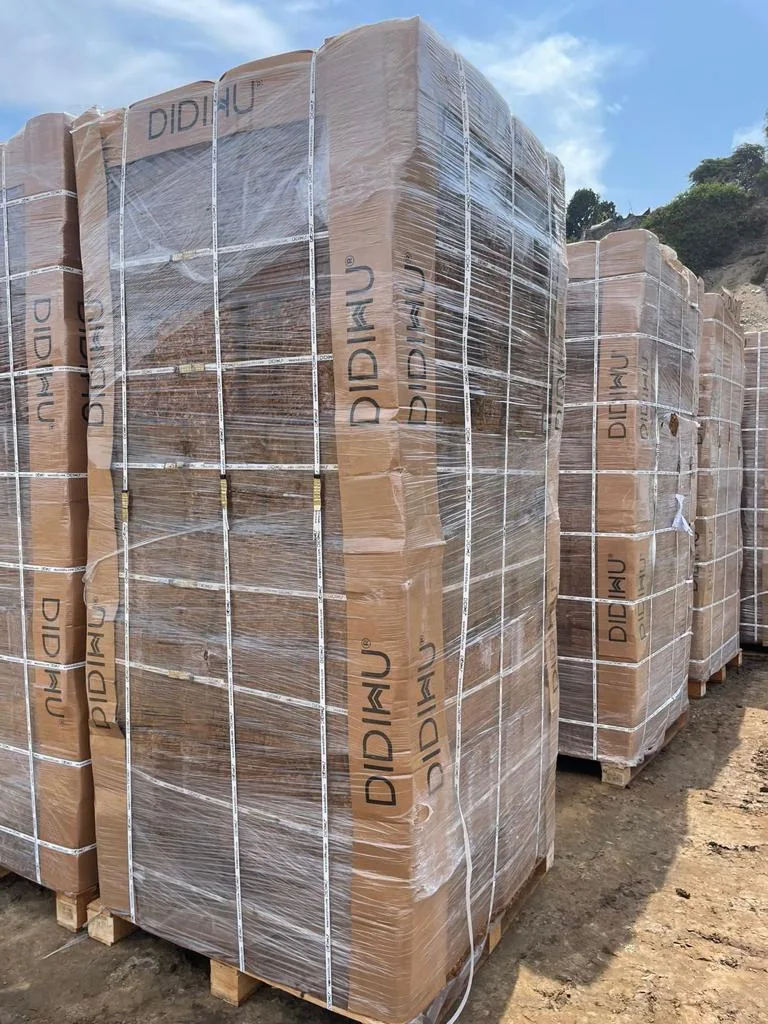
a) Unpack the product on a surface covered with thick plastic to help the water flow.
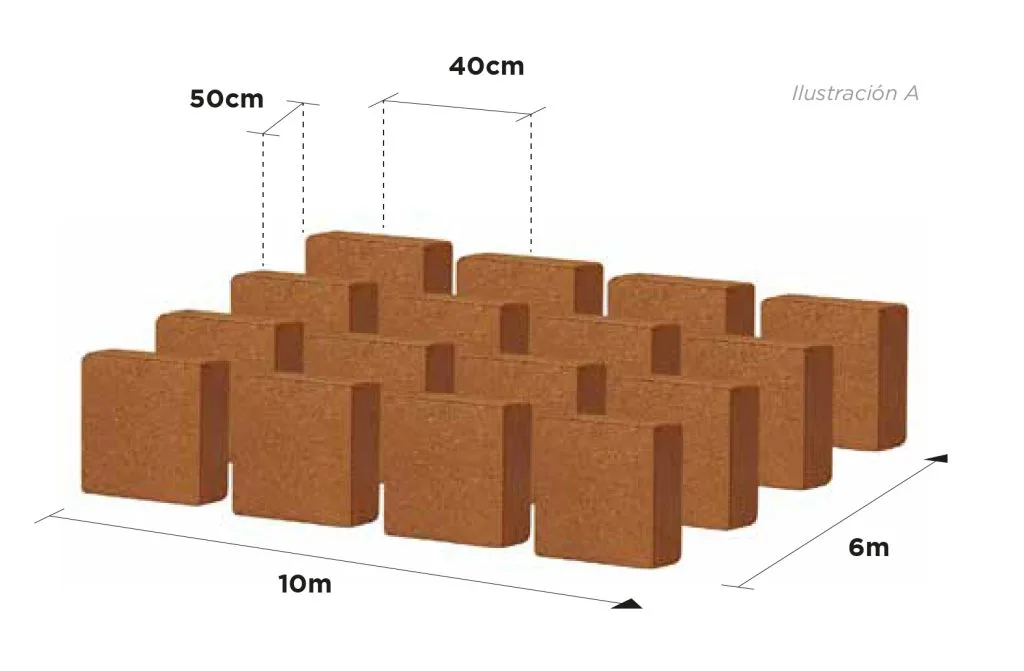
b) Ideally, the blocks should be arranged in rows of 12 units each. This way, you'll need to plan for a 6m x 10m space to unload each pallet.
c) It's important to place each block upright.
d) We recommend leaving 50 cm of space behind each block and 40cm on each side, since the material will expand to approximately 3 times its size. (Illustration A)
STEP 2:
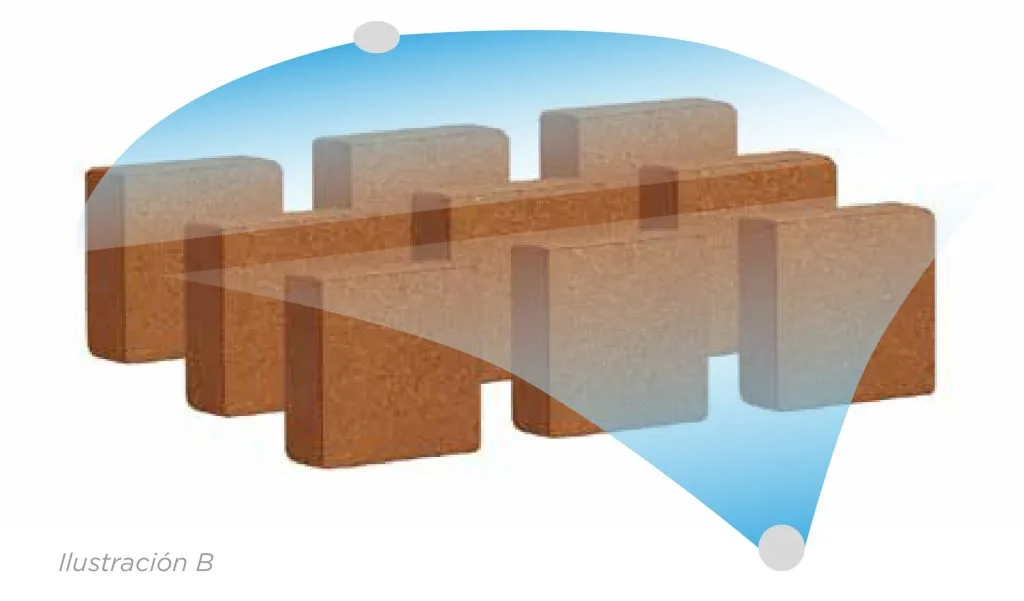
a) Set up an irrigation method that sprays all the blocks until they practically merge and no gaps remain between them. (Illustration B)
b) Let the excess water drain off.
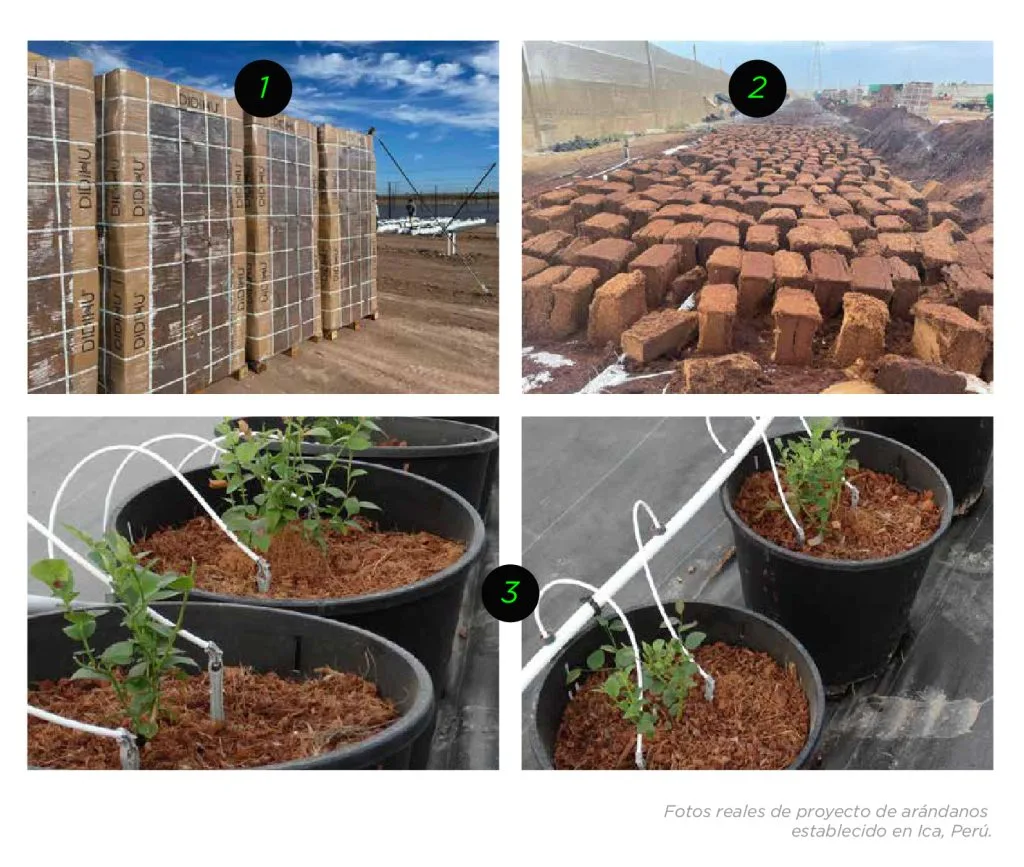
STEP 3:
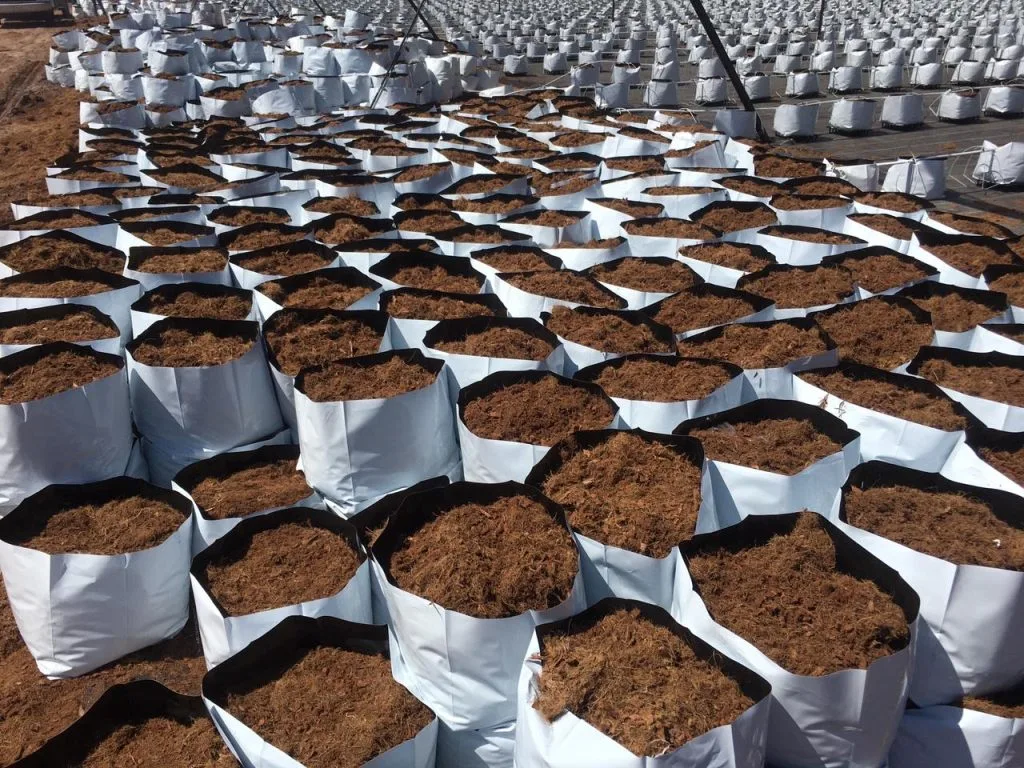
a) Once it has expanded, the fiber can be handled and will be ready to be distributed into grow bags or pots.
Now that you know the process, all that's left is to put it to the test and enjoy the advantages of compressed blocks to boost your crops and achieve more satisfying results sustainably. This is just one part; we invite you to learn about the Organic Premium Mix Naked Block in detail by clicking here.