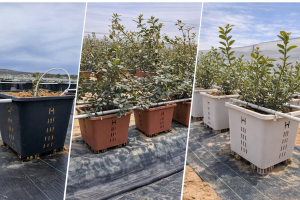
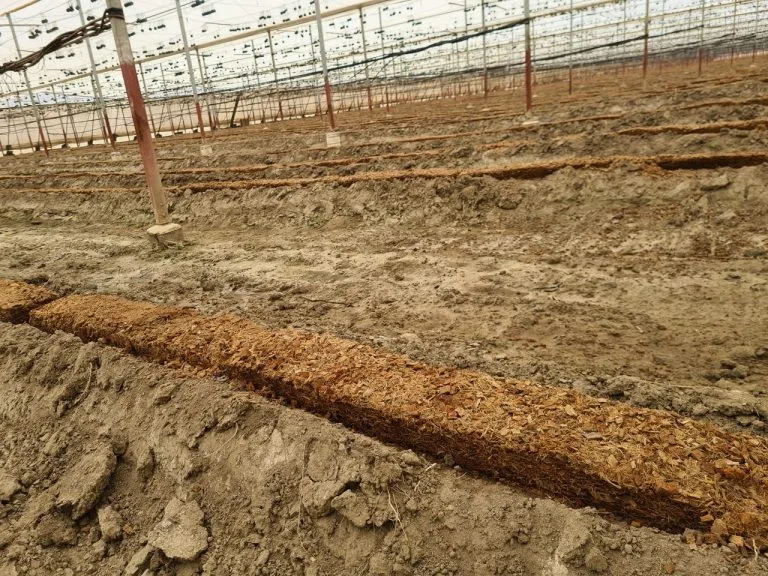
At DIDIHU, our mission is to find ways to produce more with less, economically and sustainably. We actively promote hydroponic agriculture, but at the same time we are aware that one of growers’ most important resources is their soil.
In recent years, we identified a strong need to offer a technology that acts as a middle ground between hydroponics and soil, making the most of the investment in shade houses and giving the soil new life.
Key factors of the mixed system:
• Reduces susceptibility to soil-borne diseases.
• Supports fast, uniform establishment of newly planted crops.
• Improves yield and harvest quality.
• Eases the learning curve when switching from soil to hydroponics.
• Lower investment vs. 100% hydroponics.
• Less risky transition to hydroponics.
• Soil-like management = growers can rely on their knowledge and
experience.
• Ideal for growing under shade netting or even in open fields.
Agronomic management:
4,800 – 5,000 linear meters per hectare.
RECOMMENDATIONS
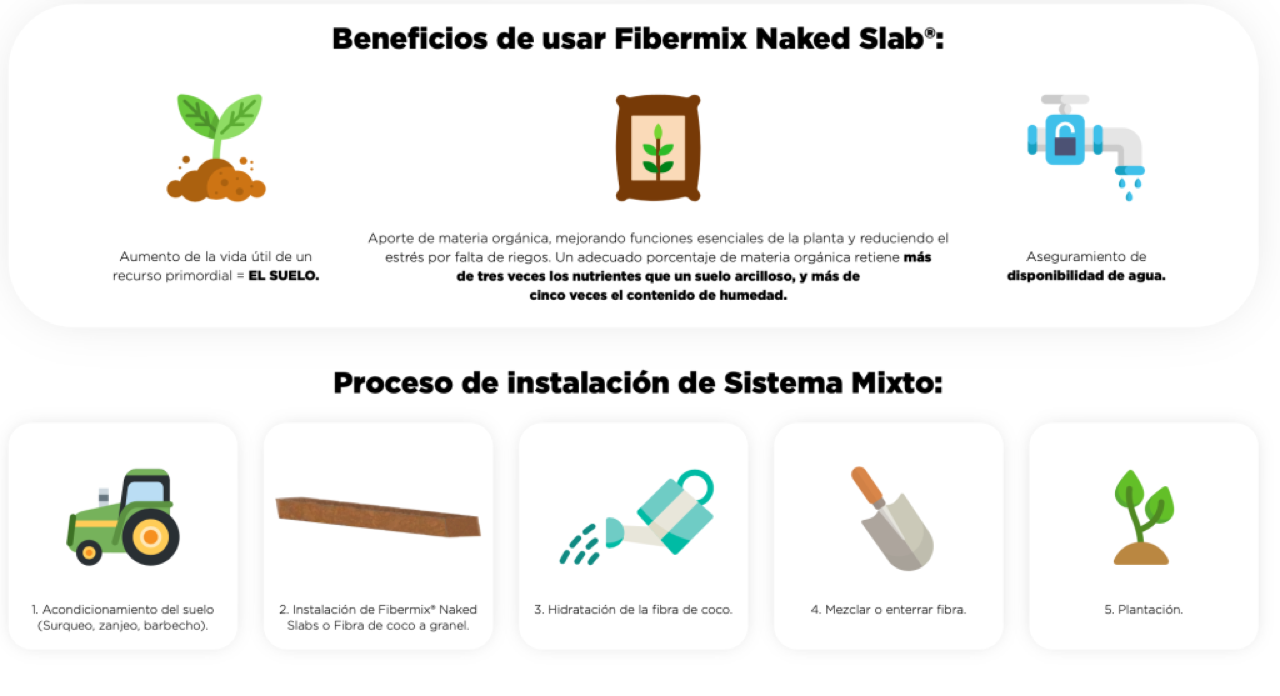
*Use the agricultural implements normally used for soil decompaction and furrowing.
*Hydrate the coconut fiber slabs
*(in the case of imported product) before mixing them with the soil.
*Loose or expanded coconut fiber is easier to mix with soil, and you’ll achieve better uniformity.